What Is a Sewage Treatment Plant?
A Sewage Treatment Plant (STP) is a wastewater treatment system designed to remove organic matter, suspended solids, harmful microorganisms, and other contaminants from sewage. The treatment process generally includes preliminary treatment, primary treatment, biological treatment, clarification, filtration, and disinfection.
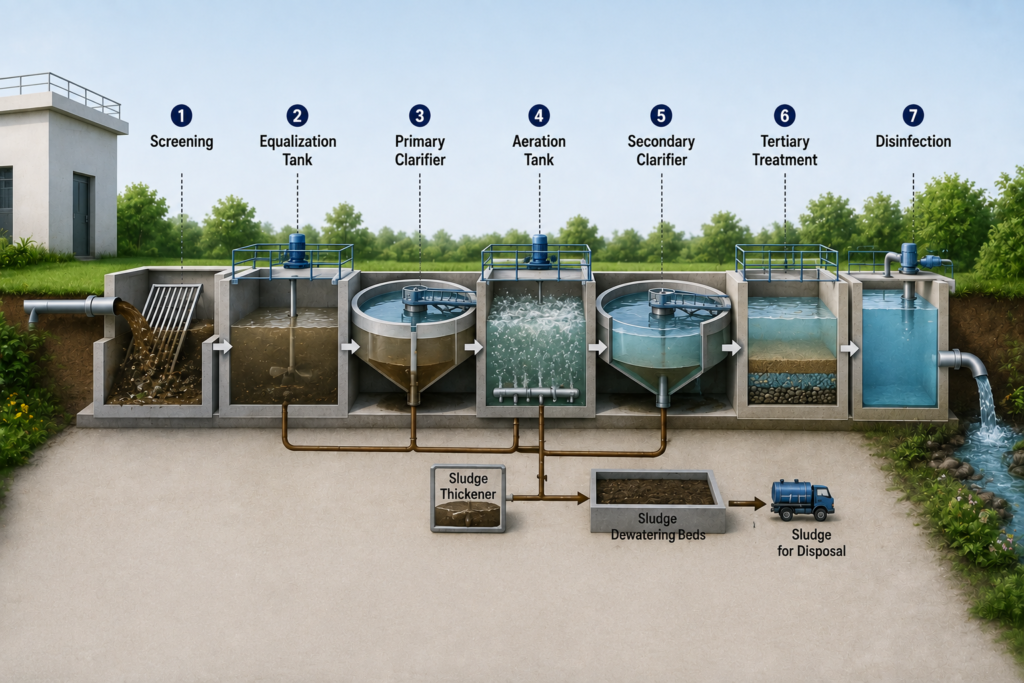
How Does an STP Work?
An STP works through a series of treatment stages. Each stage performs a specific function to progressively remove contaminants from sewage and improve the quality of treated water.
Screening
The first stage removes large floating materials such as:
- Plastics
- Paper
- Cloth
- Solid waste
- Other large debris
Screening protects pumps and other treatment equipment from blockage and damage.
Grit Removal
The sewage passes through a grit removal process where heavier inorganic particles such as sand, gravel, and small stones are separated from the wastewater.
Primary Treatment
During primary treatment, suspended solids and heavier organic particles settle at the bottom of a settling tank. The settled material forms primary sludge, while relatively clearer wastewater moves to the biological treatment stage.
Biological Treatment
Biological treatment is one of the most important stages of an STP. Microorganisms break down dissolved and biodegradable organic matter present in the wastewater.
Common biological treatment processes include:
- Aeration
- Activated Sludge Process
- MBBR
- SBR
- MBR
Aeration Process
In the aeration tank, oxygen is supplied to the wastewater to support the growth and activity of beneficial microorganisms. These microorganisms consume organic pollutants and help reduce the biological load of the sewage.
Secondary Clarification
After biological treatment, the wastewater enters a secondary clarifier. Microbial biomass and suspended solids settle at the bottom, while the clarified treated water moves forward for further treatment.
Filtration
Filtration removes remaining suspended particles and impurities from the treated water. Depending on the required water quality, different filtration systems may be used.
Disinfection
The treated water is disinfected to reduce harmful microorganisms and pathogens. Common disinfection methods include:
- Chlorination
- UV disinfection
- Ozonation
Sludge Treatment
Sludge generated during the treatment process is collected and further treated or dewatered. Proper sludge management helps reduce its volume and allows safer handling and disposal.
Treated Water Reuse
After adequate treatment, the treated wastewater can be reused for suitable non-potable applications such as:
- Gardening and landscaping
- Toilet flushing
- Floor cleaning
- Vehicle washing
- Cooling applications
- Industrial utilities
Benefits of STP
- Reduces water pollution
- Treats domestic and municipal sewage
- Supports wastewater reuse
- Reduces freshwater consumption
- Protects water bodies
- Helps meet environmental requirements
- Supports sustainable water management
- Improves overall sanitation
Applications of STP
STP systems are commonly used in:
- Residential complexes
- Commercial buildings
- Hotels and resorts
- Hospitals
- Schools and colleges
- Industries
- Malls and shopping complexes
- Municipal facilities
Importance of Proper STP Treatment
Proper sewage treatment is essential for protecting the environment, reducing water pollution, and promoting water reuse. A well-designed and properly maintained STP can efficiently treat wastewater and provide consistent treated water quality.
Conclusion
A Sewage Treatment Plant uses multiple treatment stages to remove solids, organic matter, suspended particles, and harmful microorganisms from sewage. From screening and biological treatment to clarification, filtration, and disinfection, each process plays an important role in producing treated water suitable for reuse or safe discharge.
Looking for an STP Solution in Pune?
Get in touch with TMS Water Solutions for customized Sewage Treatment Plant solutions designed according to your wastewater volume, site requirements, and treatment needs.